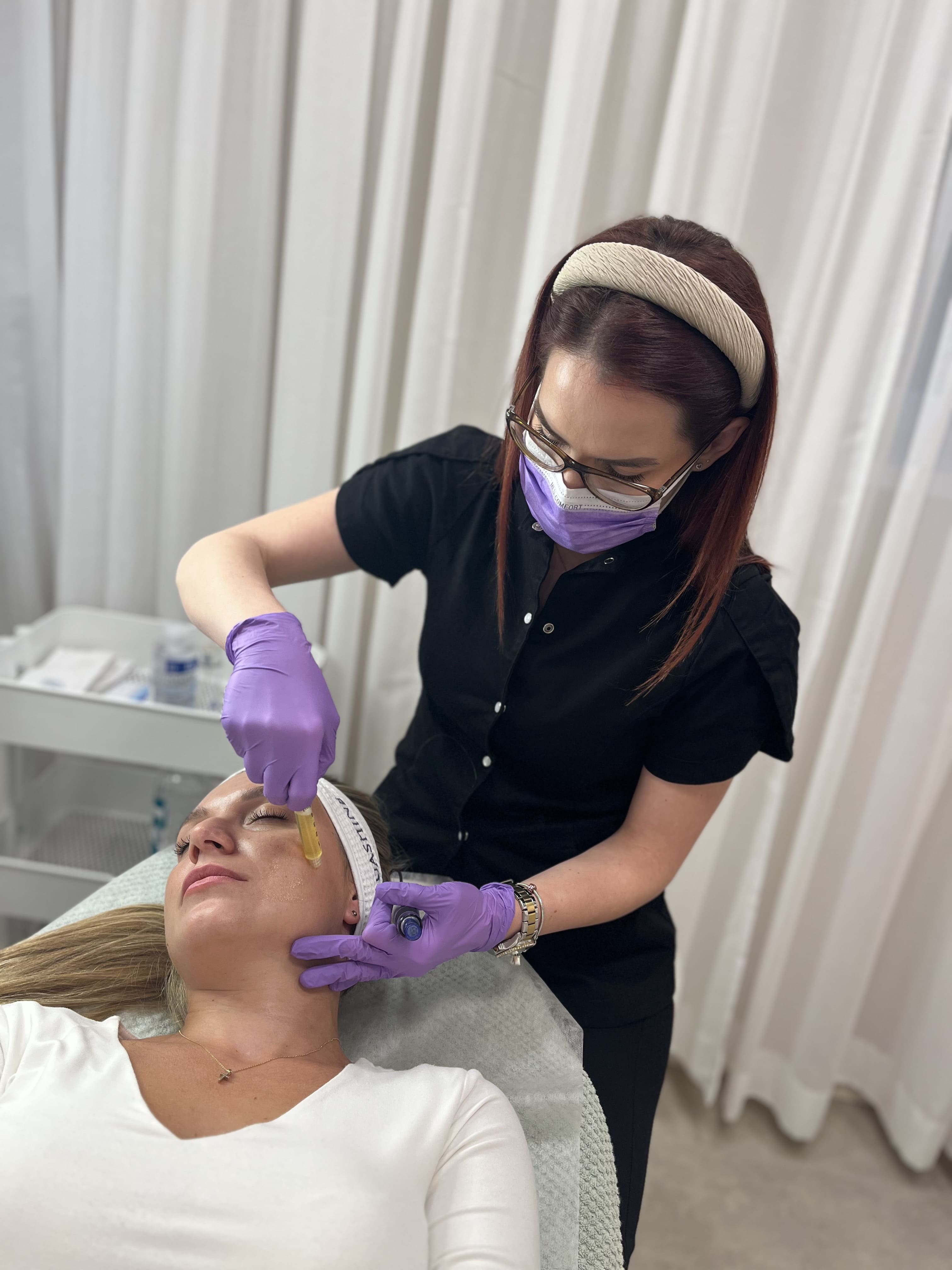
Chemical peel treatment Dermiere Aesthetic

Chemical peeling

What is chemical peeling?

Chemical peeling is a dermatological treatment that uses carefully selected acids to remove the surface layers of the skin, encouraging cell renewal and stimulating collagen production. The result is cleaner, more even, brighter and healthier skin.

The treatment is always adapted to the skin type and specific problem of the patient, which is why it is safe and effective for different ages and skin types.

Procedure

What is chemical peeling for?

Chemical peeling is used for:

  • improving skin texture and quality
  • reducing fine lines and first wrinkles
  • acne treatment and scar formation
  • reduction of hyperpigmentation and spots
  • regulation of sebum secretion and narrowing of pores
  • refreshed and even complexion
  • stimulating regeneration and collagen

Which regions can be treated?

  • lice
  • neck
  • cleavage
  • sake
  • back (especially with acne)

What does the treatment itself look like?

Before the treatment, the skin is thoroughly cleansed and prepared. Then, a chemical solution is applied to the skin, which works for a certain time, depending on the type of peel and the condition of the skin.

During the treatment, a slight burning or warmth may occur, which is a normal and transient reaction. The treatment lasts an average of 20–30 minutes and does not require anesthesia.

Does the skin peel?

It depends on the type of peeling:

  • superficial peeling – mild or imperceptible peeling
  • medium-deep peeling – visible peeling that lasts for several days

What should not be done after a chemical peel?

After treatment it is important to:

  • avoid direct sunlight and solarium
  • It is mandatory to use SPF protection.
  • do not remove peeling skin
  • avoid aggressive cosmetics for a few days
  • do not use retinol and strong acids unless advised by a doctor

When are the results visible?

The skin looks fresher and brighter after the first treatment.
For longer-lasting and more pronounced results, a series of treatments is recommended, at intervals determined by the doctor.

How long does the effect of chemical peeling last?

The effect depends on skin type, type of peel and post-treatment care. With regular maintenance and proper home care, the results can last for months.

When is chemical peeling not recommended?

  • during pregnancy and breastfeeding (depending on the preparation)
  • in active skin infections
  • for open wounds or irritations
  • for certain skin diseases (as assessed by a doctor)

Is chemical peeling safe?

Yes. When performed in a medical office, with professional assessment and quality products, chemical peeling is a safe, controlled, and effective treatment.

Who is chemical peeling ideal for?

Chemical peeling is suitable for:

  • young people who want cleaner and healthier skin
  • people with the first signs of aging
  • patients with acne, blemishes or uneven skin tone
  • everyone who wants a refreshed and nourished skin appearance

Who is chemical peeling ideal for?

Chemical peeling is suitable for:

  • young people who want cleaner and healthier skin
  • people with the first signs of aging
  • patients with acne, blemishes or uneven skin tone
  • everyone who wants a refreshed and nourished skin appearance

Frequently asked questions about chemical peeling (FAQ)

Is chemical peeling good for dry skin?

Yes. A properly selected chemical peel does not dry out the skin, but:

  • removes dead cells
  • improves absorption of active ingredients
  • stimulates skin renewal

For dry and dehydrated skin, milder, hydrating peels are used, often in combination with biorevitalization or skin boosters to achieve maximum effect.

How many treatments are needed?

The number of treatments depends on the problem being treated:

  • Refreshment and shine: 1–2 treatments
  • acne, blemishes, texture: 3–6 treatments
  • maintenance: 1 treatment every 1–3 months

The treatment plan is always made individually.

When is the best time for a chemical peel?

The ideal time for a chemical peel is:

  • autumn and winter, when solar radiation is weaker

Peeling can also be done during spring, but with:

  • strict SPF protection
  • proper post-treatment care

What are the differences between chemical peels?

Chemical peels differ according to:

  • depth of action (superficial, medium-deep)
  • type of acid
  • intensity and goal of treatment

Superficial peels – refreshment, glow, even complexion
Srednje duboki pilinzi – fleke, akne, bore, tekstura kože
Medium-deep peels – blemishes, acne, wrinkles, skin texture

The doctor chooses the peel according to the skin condition and the desired effect.

What are the effects of chemical peeling?

After a properly performed treatment, the skin becomes:

  • smoother and more even
  • brighter and more radiant
  • with reduced pores
  • with softened fine lines
  • healthier and fresher looking

What can chemical peeling be combined with?

Chemical peeling is often combined with other treatments to achieve faster and longer-lasting results:

  • Skinboosters and biorevitalization – hydration and elasticity
  • Mesotherapy – additional regeneration and shine
  • PRP therapy – collagen renewal and stimulation
  • Microneedling – improving texture and scars
  • Anti-aging protocols – comprehensive care and rejuvenation

Combinations are always planned individually and professionally.

Why choose chemical peeling at Dermiere Aesthetic Clinic?

In our office:

  • Each peeling is adapted to the skin type and condition.
  • we use proven medical preparations
  • Treatments are performed exclusively by healthcare professionals
  • the focus is on natural, healthy and long-lasting results